This Week in Vibe Code: The Agent Ecosystem Explodes
What We Scanned
Every week we run our discovery pipeline against GitHub trending and score tools for vibe coding relevance. This week: 67 tools, broken down into Dev Tools (27), AI (25), UI (11), and Backend (4).
The biggest takeaway? The tools themselves aren't what's trending. The ecosystem around them is.
The Pattern: Agent Infrastructure
Claude Code hit 130K stars. Codex CLI is at 89K. Those aren't new — they've been growing for months. What's new is everything being built *on top* of them:
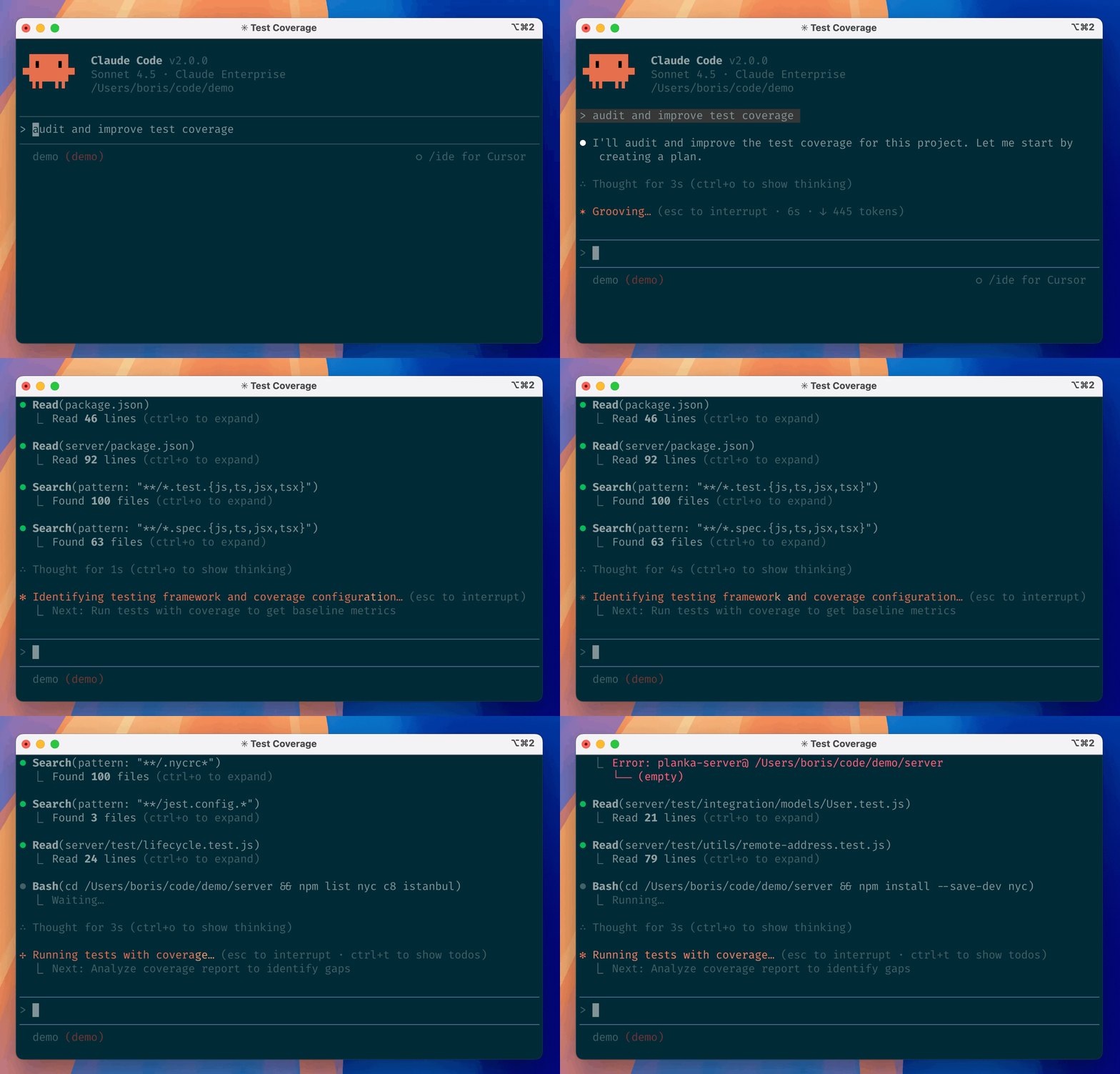
Claude Code — AI coding agent in the terminal
Compound Engineering Plugin (19.8K stars) lets Claude Code, Cursor, and Codex work together on multi-step builds. Think of it like a project manager that assigns different AI tools to different parts of a task. This is the first real sign of multi-agent orchestration going mainstream.
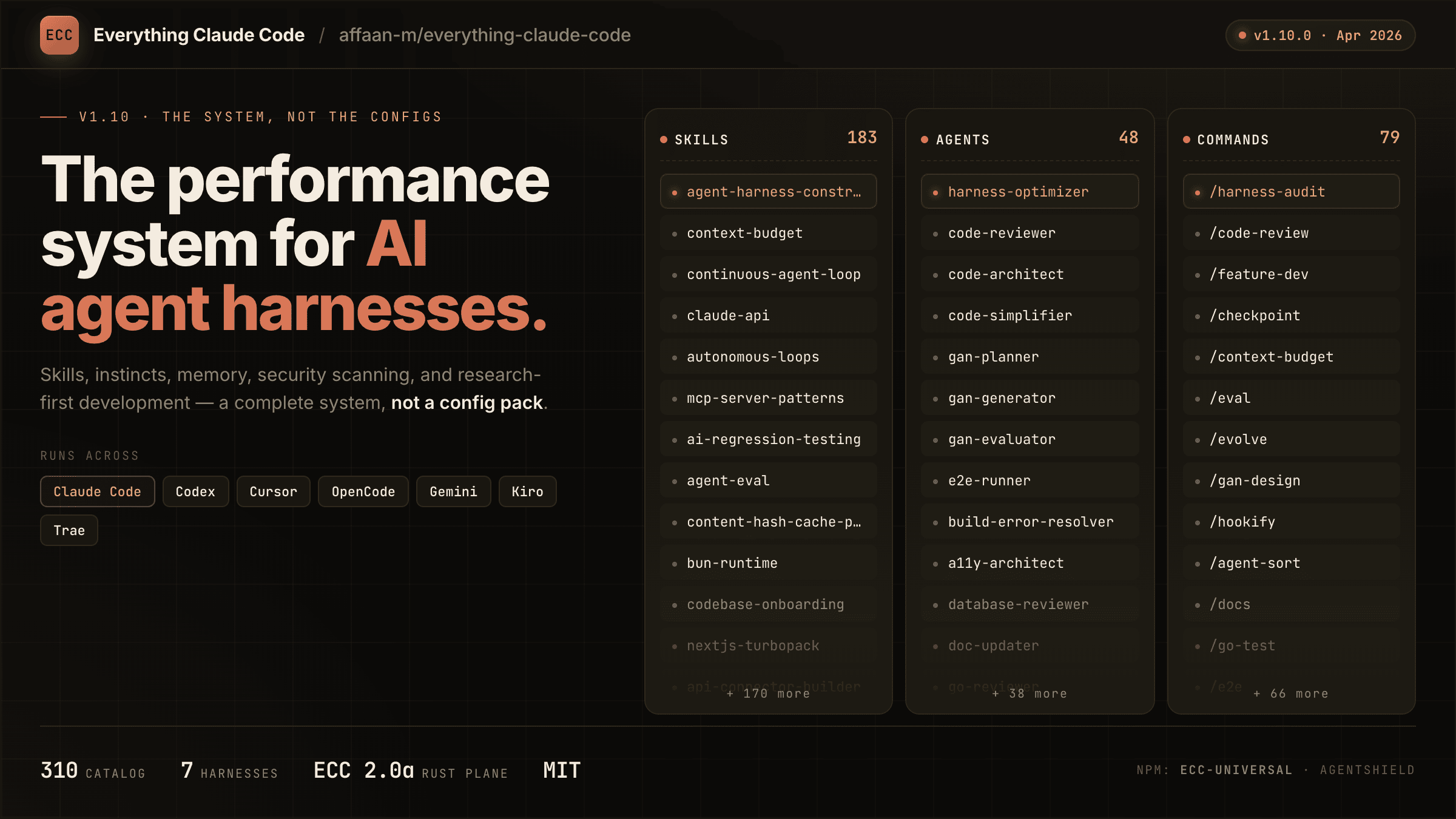
ECC — Performance harness for AI coding agents
ECC (207K stars) is a harness that adds skills, memory, and instincts to your coding agent. It remembers your past sessions and automatically avoids mistakes it's made before. The fact that this has more stars than Claude Code itself tells you something — people don't just want an AI coder, they want one that *learns*.
Anthropic Agent Skills (146K stars) is a public library of composable skills for Claude Code. Web search, file management, deployment — pre-built modules you plug in. Like IKEA furniture for your AI assistant.
Why This Matters
A year ago, the question was "which AI coding tool should I use?" Now the question is "how do I make my AI coding tool smarter?"
That's a platform shift. When people stop comparing tools and start building infrastructure around one, that tool won. The data says Claude Code's ecosystem is growing fastest — ECC, Agent Skills, CodeGraph, CC Switch, SkillShare are all built specifically for it.
The Codebase Understanding Wave
Three tools this week are solving the same problem: helping AI understand your code better.
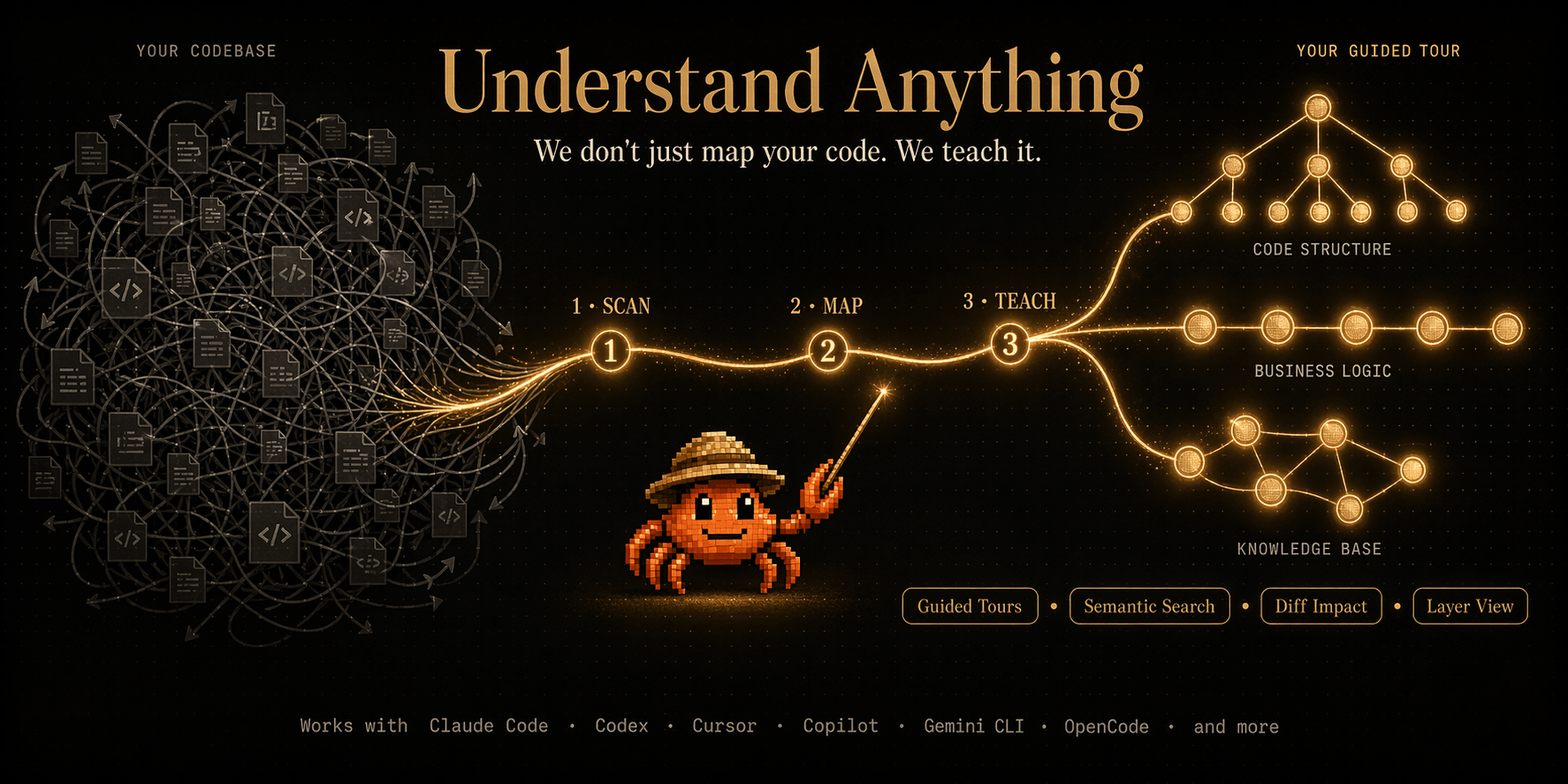
Understand Anything — Interactive codebase knowledge graph
Understand Anything (52K stars) turns any codebase into an interactive knowledge graph. Instead of reading files one by one, your AI sees the whole map.
CodeGraph (41K stars) pre-indexes your code into a graph so Claude Code and Cursor can find what they need instantly. Like adding an index to a textbook before studying.
CodexBar (14K stars) is a macOS menubar app showing your usage stats — token consumption, cost, session history. Not a coding tool, but a sign that people are treating AI agents like infrastructure they need to monitor.
Outside the Dev Tools Bubble
Not everything this week was agent tooling:
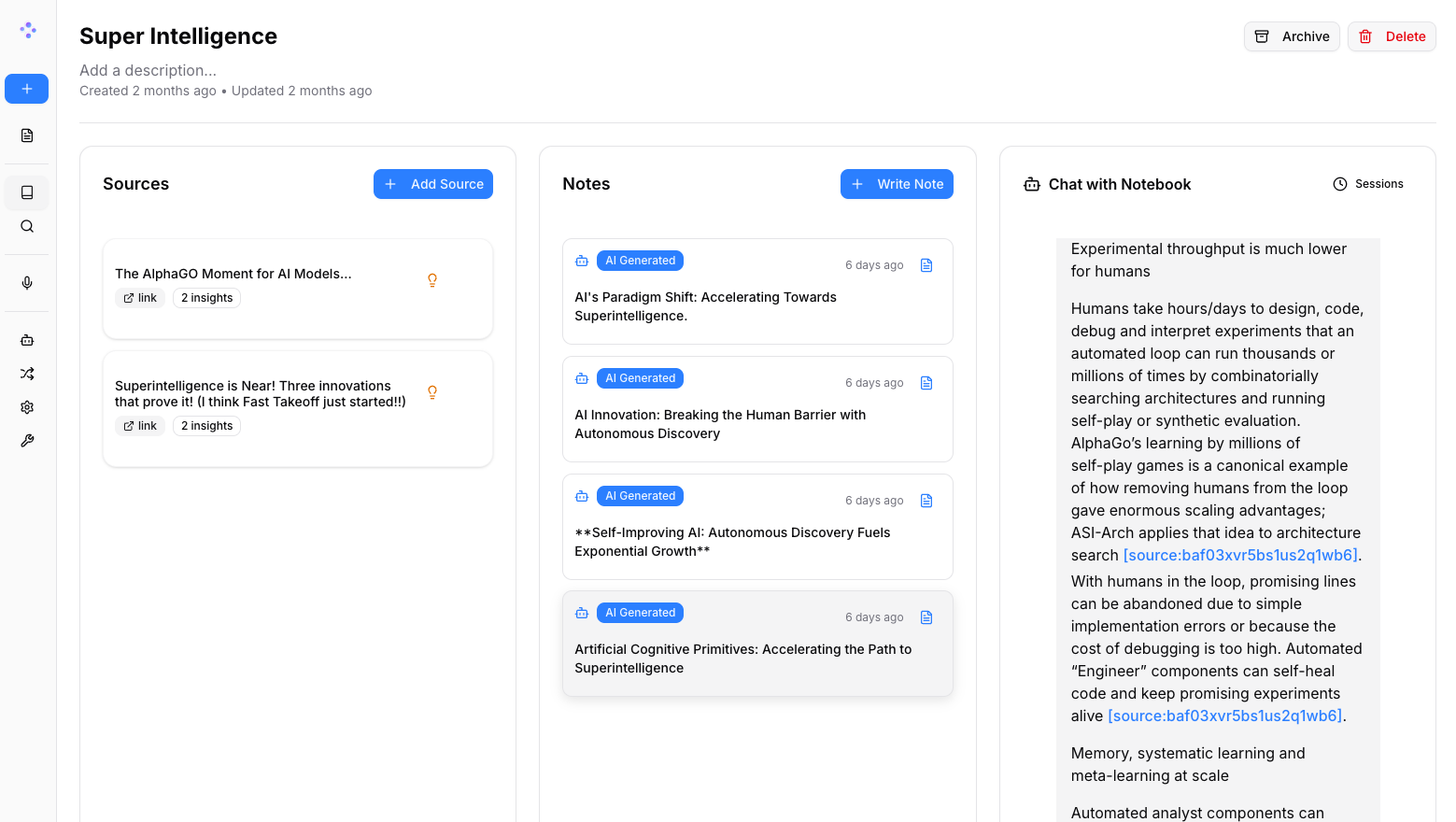
Open Notebook — Open-source NotebookLM alternative
Open Notebook (25K stars) is an open-source NotebookLM alternative — upload docs, ask questions, get answers. Runs locally. This is the "AI for non-coders" trend quietly growing alongside vibe coding.
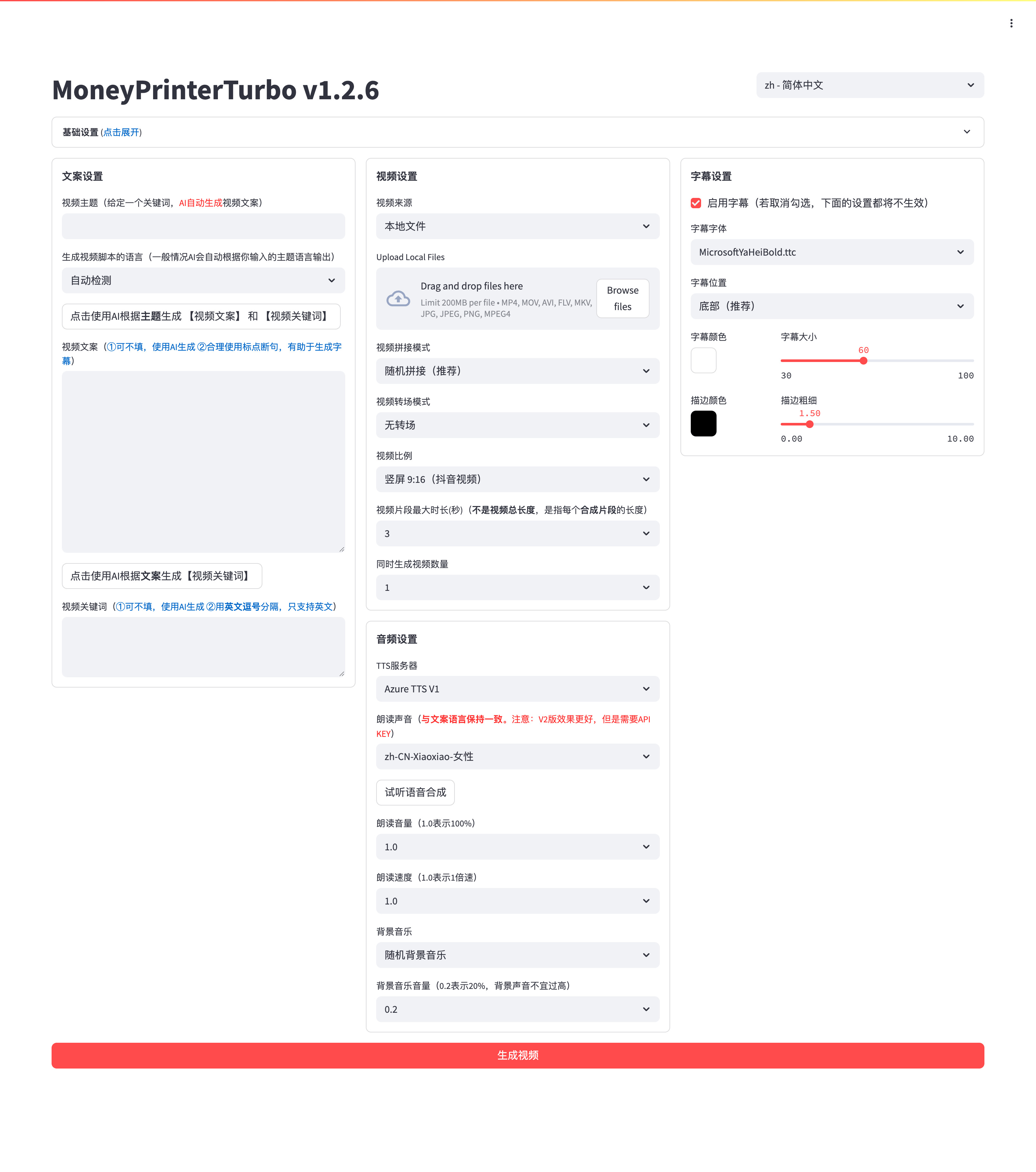
MoneyPrinter Turbo — AI video generation from text
MoneyPrinter Turbo (79K stars) generates short videos from text prompts. Nothing to do with coding, but 79K stars means people are vibe-creating in other domains using the same pattern: describe what you want, let AI build it.

Open-LLM-VTuber — Local voice assistant with a virtual body
Open-LLM-VTuber (9.7K stars) is a local voice assistant in a virtual body. Sounds niche, but it points to where AI interfaces are heading — from text chat to something more ambient and always-on.
The Takeaway
The vibe coding stack is maturing. We're past "which AI writes better code" and into "how do I build a workflow around AI agents." If you're still using Claude Code or Cursor out of the box, look at what the ecosystem is offering — skills, memory, multi-agent coordination, codebase graphs. That's where the leverage is now.
Full tool list with scores and profiles: check the dictionary.